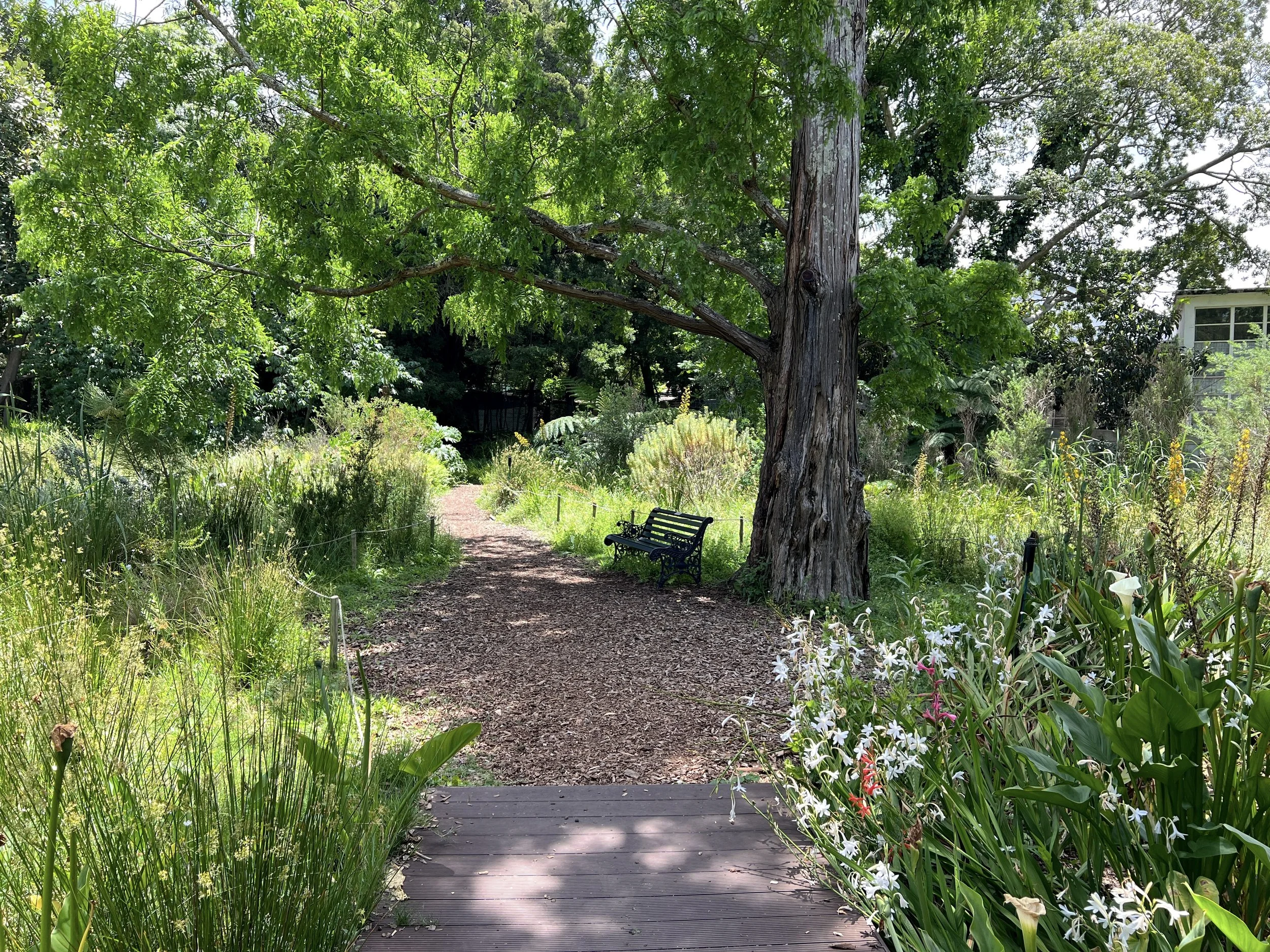
The Arderne Gardens wetland functions as a hub for biodiversity in the garden and a stepping stone for avifauna moving through the built environment. This unique garden is an example of urban conservation landscaping, and demonstrates the important biodiversity heritage of Fynbos Wetlands.

FYNBOS IN THE CITY
The Cape Floristic Region at the tip of Africa is the smallest of six floral kingdoms in the world and boasts the most concentrated plant diversity in the world. This rich fynbos kingdom is made of plant communities that are dominated by Ericas, Restios and Proteas.
Hundreds of years ago the lowlands of Cape Town were home to the species-rich Cape Flats Sand Fynbos vegetation. This habitat was defined by nutrient poor, sandy soil, that was seasonally flooded during the cold and wet winters. Only fragments of these seasonal wetland ecosystems remain between suburbs and today only 1% of Cape Flats Sand Fynbos is under conservation.
WETLAND ECOSYSTEMS
The closest remnant habitats to the Arderne Gardens are the Kenilworth Racecourse and Rondebosch Common Conservation Areas. These lowland habitats support a diversity of fauna, many of which are threatened, such as the Cape Micro Frog (Microbatrachella capensis) which is only found in a few seasonal pools in the centre of Kenilworth Racecourse. Another lowland amphibian, the Western Leopard Toad (Amietophrynus pantherinus) has adapted to suburban gardens, but annually migrates to wetlands in late winter to breed.
THE ARDERNE GARDENS WETLAND
The Arderne Gardens is the source of a spring which feeds into the Keurboom River. The Friends of the Arderne Gardens have rehabilitated this wetland ecosystem with locally endemic plants that would have historically grown on the Claremont lowlands. The wetland habitat was rehabilitated with a community of fifty plant species, of which many are on the Red List.
The Whorled Heath (Erica verticillata) only ever grew in wetlands where the southern suburbs are now built. It is classified as Extinct in the Wild. The Critically Endangered Pearl Heath (Erica margaritacea) was once widespread on the Cape Town lowlands. A remnant population of a few hundred plants is all that is left.
The Critically Endangered Rondevlei Spiderhead (Serruria foeniculacea) is in the Protea family. Two plants were rescued in the 1970s as part of an ongoing conservation project. There are now a few hundred in the wild.
LOOKING OUT FOR BIRDS
Around thirty bird species have been recorded at the Arderne Gardens, with more expected as the wetland garden matures.
The Gardens checklist includes:
Cape robin-chat
Cape turtle dove
Cape canary
Laughing dove
Cape batis
Spotted thick-knee
Burchell’s coucal
Cape wagtail
Cape white-eye
Bronze mannkin
Swee waxbill
House sparrow
Speckled pigeon
African harrier-hawk
Olive thrush
Guinea fowl
Cape bulbul
Grey heron
Various sunbirds
Pintailed whydah
Red-winged starling